Editorial Note
Where Atomic Habits gives you the system, Duhigg gives you the science. The neurological loop -- cue, routine, reward -- is laid out with enough case studies that the abstract becomes concrete. The Starbucks and NFL sections alone are worth it.
Harris F.
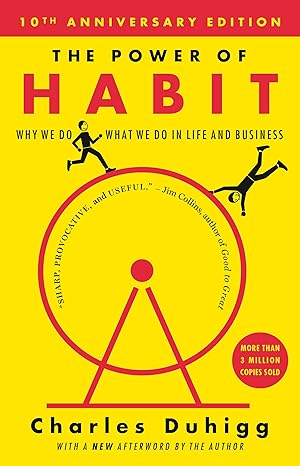
Charles Duhigg’s The Power of Habit arrived in 2012 as one of the most thorough investigations of habit science ever written for a general audience. Where self-help books typically tell you what to do, Duhigg goes a step further and explains why habits form at all — diving into the neuroscience of the basal ganglia, the social dynamics of organizational culture, and the historical mechanics of social movements. The result is a book that feels less like a productivity manual and more like a detective story, weaving together research labs, NFL locker rooms, corporate boardrooms, and Alcoholics Anonymous meetings to illuminate a single unifying idea: habits are not destiny — they are a code that can be read and rewritten.
The book’s lasting significance is that it popularised the concept of the habit loop — cue, routine, reward — and introduced it as the fundamental unit of all habitual behaviour. This framework has since become the foundational vocabulary of behavioural science communication, influencing everything from product design (the “hook model”) to public health campaigns. For readers, it offers something rare: a model of human behaviour that is simultaneously scientifically grounded, practically actionable, and genuinely revelatory.
The Habit Loop: The Core Framework
At the heart of the book is a deceptively simple neurological model. Every habit, Duhigg argues, consists of three elements that form a loop the brain runs automatically once established:
- Cue — the trigger that tells the brain to enter automatic mode. It can be a time of day, a location, an emotion, a sequence of thoughts, or the presence of other people.
- Routine — the physical, mental, or emotional behaviour that follows the cue. This is the habit itself — what we typically think of when we say “habit.”
- Reward — the positive reinforcement that helps the brain decide whether this loop is worth remembering for the future.
Over time, this loop becomes increasingly automatic. The brain chunks the cue-routine-reward sequence into a single unit, offloading it from conscious decision-making and freeing up mental bandwidth. This is neurologically efficient — but it also means habits can persist long after they’ve stopped being useful, and can be hijacked by cues we don’t consciously notice.
Chapter by Chapter Analysis
Part One: The Habits of Individuals
-
Chapter 1: The Habit Loop — How Habits Work — Opens with the remarkable story of Eugene Pauly, a man whose severe memory loss left him unable to remember what he had eaten for breakfast, yet who could navigate his neighbourhood on his daily walk and find the chocolate in his kitchen without thinking. Duhigg uses Eugene to introduce the basal ganglia — the primitive brain structure that governs habit formation — and to show that habits operate entirely outside conscious memory. The key insight is that the brain will always look for a way to chunk repeated behaviours into automatic routines. Once a habit is stored, it can be triggered by a cue and run to completion with almost no conscious involvement.
-
Chapter 2: The Craving Brain — How to Create New Habits — Introduces the concept of craving as the engine that powers habit loops. Using Procter & Gamble’s struggle to market Febreze — a product that initially flopped because it had no discernible scent — Duhigg shows how the addition of a satisfying smell created the craving that made the product into a billion-dollar brand. He also examines how Claude Hopkins used “tingling” toothpaste to make tooth-brushing habitual, and how advertisers deliberately engineer the anticipatory craving that makes habits sticky. The lesson: a routine only becomes habitual when the brain begins craving the reward before the routine is even complete.
-
Chapter 3: The Golden Rule of Habit Change — Why Transformation Occurs — This is the most practically important chapter. Duhigg argues that you cannot extinguish a habit — you can only replace the routine. The cue and the reward must stay the same; only the routine in the middle can be swapped. He calls this the Golden Rule of Habit Change and illustrates it with the NFL career of Tony Dungy, who transformed losing teams into champions by training players to recognise their on-field cues and automate new, better responses. He also examines how AA’s twelve-step programme works: by identifying the emotional cues behind drinking and substituting the social ritual of meetings for the drinking routine, while preserving the sense of community and relief (the reward) that alcohol had provided.
Part Two: The Habits of Successful Organisations
-
Chapter 4: Keystone Habits — Which Habits Matter Most — Introduces one of the book’s most powerful ideas: keystone habits — habits that, when changed, set off a chain reaction that restructures other habits. Duhigg uses the example of Paul O’Neill, who became CEO of Alcoa — a struggling industrial company — and focused obsessively on worker safety. By making safety the central habit of the organisation, he inadvertently created communication systems, accountability structures, and management practices that transformed Alcoa into one of the most profitable companies in the Dow Jones. The lesson: rather than trying to change everything at once, find the keystone habit that carries the most leverage.
-
Chapter 5: Starbucks and the Habit of Success — When Willpower Becomes Automatic — Examines how willpower is itself a habit that can be deliberately cultivated. Starbucks trains its employees using a technique called “LATTE” (Listen, Acknowledge, Take action, Thank, Explain) — a pre-programmed routine that kicks in automatically when a difficult customer situation arises. Because the response has been practised until it’s habitual, employees don’t need to rely on in-the-moment willpower. Duhigg connects this to research showing that willpower is a finite resource that depletes with use (the “ego depletion” concept), and argues that the solution is to build routines that make the right behaviour automatic before willpower is needed.
-
Chapter 6: The Power of a Crisis — How Leaders Create Habits Through Accident and Design — Explores how organisational habits emerge from the informal power structures, unwritten rules, and established routines within institutions. Duhigg examines Rhode Island Hospital, where a toxic culture of hierarchical disrespect between surgeons and nurses led to preventable deaths, and shows how a deliberate crisis was manufactured to break the old habits and install new ones. The insight is that organisations don’t have conscious minds — they have habits — and those habits are often the product of historical accident rather than intentional design. The best leaders understand this and use crises, real or manufactured, as windows of opportunity to install better institutional habits.
-
Chapter 7: How Target Knows What You Want Before You Do — A fascinating case study in the commercial application of habit science. Duhigg reveals how Target’s data scientists developed a statistical model to identify pregnant customers by analysing subtle shifts in their purchasing patterns — buying unscented lotion, mineral supplements, and cotton wool balls — before the customer had told anyone. Target used this to send targeted marketing timed to arrive precisely when new parents are forming new purchasing habits, a window of extraordinary commercial opportunity. The broader point is that habit formation creates predictable patterns that can be detected, anticipated, and engineered from the outside.
Part Three: The Habits of Societies
-
Chapter 8: Saddleback Church and the Montgomery Bus Boycott — How Movements Happen — Applies habit theory to social movements. Duhigg examines both the Montgomery Bus Boycott and the rise of Rick Warren’s Saddleback Church and finds the same three-phase structure: movements begin with the social habits of close friendships; they spread through the habits of communities and weak social ties; and they endure by giving participants a new sense of identity and a new set of habits that make participation self-reinforcing. The story of Rosa Parks is reexamined not as a simple act of individual courage but as an event that succeeded because of her deep integration into the social habit networks of Montgomery’s Black community.
-
Chapter 9: The Neurology of Free Will — Are We Responsible for Our Habits? — The most philosophical chapter, examining the question of moral responsibility in the context of habit automaticity. Duhigg examines two disturbing legal cases — a man who murdered his wife during an apparent sleepwalking episode, and a compulsive gambler who lost her family’s savings — and asks whether people can be held responsible for behaviours driven by automatic habit loops they did not consciously choose. His conclusion is nuanced: once you become aware of a habit, you have a responsibility to change it. Ignorance of the habit loop may be an excuse; awareness of it is not.
The Habit Change Framework
Duhigg’s practical prescription for change, derived from the Golden Rule, involves four steps:
- Identify the routine — what is the behaviour you want to change?
- Experiment with rewards — to find which reward is actually driving the craving, try different rewards and observe what you actually crave (e.g. is a biscuit break about sugar, or about socialising?)
- Isolate the cue — analyse the cue by asking: what time is it? Where am I? What is my emotional state? Who else is around? What did I just do?
- Have a plan — write an implementation intention: “When CUE occurs, I will perform ROUTINE in order to get REWARD.”
Keystone Habits & The Ripple Effect
One of Duhigg’s most actionable insights is that not all habits are created equal. Keystone habits have disproportionate influence — changing one creates a cascade of secondary changes across related behaviours. Common keystone habits include:
- Regular exercise — people who begin exercising regularly also start eating better, smoking less, becoming more patient, using credit cards less frequently
- Family dinners — associated with children doing better in school, having higher emotional intelligence, and showing fewer behavioural problems
- Making your bed every morning — correlated with higher productivity, greater sense of wellbeing, and better budget management
- Daily journalling — associated with greater self-awareness, emotional regulation, and goal clarity
The mechanism is not magical. Keystone habits work because they create small wins — mini successes that signal to the brain that change is possible and rewarding — and because they create new structures that make other healthy habits easier to attach to.
Main Arguments & Insights
1. Habits Are Neurological Efficiencies, Not Character Flaws: The book firmly relocates habits from the domain of moral failing to the domain of neuroscience. Habits exist because the brain is trying to save energy. The basal ganglia stores routine behaviours so the prefrontal cortex — the seat of conscious decision-making — can focus elsewhere. This reframe is important because it removes the shame and self-blame that often accompany attempts to change habits, and replaces it with a more clinical, mechanical understanding: habits are programmes that can be debugged.
2. The Craving Is the Engine: Duhigg’s most counterintuitive insight is that the cue and reward matter less than the anticipatory craving that connects them. Habits become powerful not when the reward is received, but when the brain begins expecting it. This is why habit-breaking is so hard — the craving persists even when the routine is stopped. It’s also why habit replacement works better than cold-turkey elimination: the craving for the reward is redirected to a new routine rather than left unfulfilled.
3. Belief as the Missing Ingredient: Duhigg adds a crucial fourth element to the habit loop when addressing the hardest habits to break — addiction, grief, trauma. For deeply ingrained habits, routine replacement alone is insufficient. Belief — specifically, the belief that change is possible — is the ingredient that makes replacement stick. This is why community matters: AA works not because of the twelve steps per se, but because being surrounded by people who believe change is possible makes an individual believe it too.
4. Institutional Habits Are Real and Consequential: The book’s corporate case studies — Alcoa, Target, Starbucks, Rhode Island Hospital — make a compelling case that organisations develop habits just as individuals do: through repeated patterns that become codified into culture, procedure, and unwritten rule. These institutional habits can be every bit as resistant to change as individual ones, and require the same diagnostic approach: identify the cue, experiment with the routine, preserve the reward.
Critical Reception & Perspectives
The Power of Habit was an immediate critical and commercial success on publication in 2012. It debuted at #3 on the New York Times bestseller list and spent over sixty weeks on the list, eventually selling millions of copies worldwide. The book was widely praised for its narrative approach — reviewers consistently noted that Duhigg’s storytelling made complex neuroscience genuinely gripping. The Guardian called it “a fascinating book” that “makes a compelling case that habits are the key to transforming our lives.” The New York Times praised Duhigg for “synthesising an impressive amount of research” while keeping the prose “sprightly.”
However, the book was not without criticism. Some academic reviewers noted that Duhigg occasionally overstates the scientific consensus behind his claims — the “ego depletion” findings (the idea that willpower is a finite resource that depletes) have since become one of the most contested areas in psychology, with several high-powered replication studies failing to reproduce the original effect. Duhigg’s framing of this research as settled fact was criticised as premature.
Critics of the broader self-help genre also noted that the book, like many in the category, is better at explaining why habits are hard to change than at providing a reliable method for changing them. The Golden Rule of Habit Change is elegant in theory; in practice, isolating the true cue and true reward behind any given habit is genuinely difficult, and the book’s guidance on how to do this can feel frustratingly vague. The book’s answer — keep a journal, run experiments, pay close attention — is sound but hardly revolutionary.
A more pointed critique, articulated by some neuroscientists, was that Duhigg’s account of the basal ganglia’s role in habit formation, while broadly accurate, glosses over significant complexity. The neuroscience of habit is a rich and contested field, and the clean cue-routine-reward model, while useful, is a simplification. Habits interact with motivation, emotion, and context in ways the book doesn’t fully capture.
Nevertheless, even sceptical readers tend to concede that The Power of Habit is one of the better books in its genre: the research is real (if sometimes oversimplified), the stories are genuinely illuminating, and the core framework is more useful than most self-help prescriptions. Its influence on how practitioners in design, product, public health, and management think about behaviour change has been enormous and, on balance, positive.
Real-World Examples & Implications
-
Product Design: The habit loop became the explicit foundation of Nir Eyal’s “hook model,” which shaped how social media platforms, apps, and digital products were designed in the 2010s. Variable reward schedules (the unpredictability of a social media feed) became standard in product design, partly because Duhigg’s book made the underlying neuroscience legible to a non-specialist audience.
-
Public Health: The insight that keystone habits can restructure clusters of related behaviours has influenced public health campaigns. Rather than targeting smoking, poor diet, and sedentariness simultaneously, some programmes now focus on establishing a single keystone habit — typically exercise — and letting the downstream changes follow.
-
Organisational Change Management: The Alcoa case study has become a reference point in management consulting for the idea that safety culture (or any culture-level habit) can function as a keystone institutional habit. O’Neill’s approach — focus on one visible, measurable, universally shared priority and let it restructure everything else — is now a framework taught in business schools.
-
Addiction Recovery: The book’s account of how AA works (routine replacement + community + belief) has influenced thinking in addiction medicine, where purely pharmacological approaches are increasingly supplemented by structured routine replacement and peer community models.
Suggested Further Reading
-
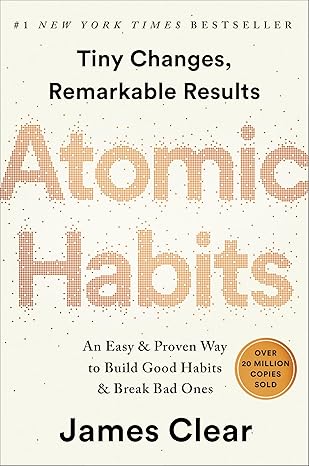
Atomic Habits by James Clear (2018) The most direct successor to The Power of Habit, offering a more prescriptive four-law framework and extending Duhigg’s ideas into a practical system. Particularly strong on environment design and identity-based change. View on Goodreads | Read our summary
-
Thinking, Fast and Slow by Daniel Kahneman (2011) Provides the broader cognitive framework within which habit science sits. Kahneman’s System 1 (fast, automatic) and System 2 (slow, deliberate) map closely onto the habitual and conscious minds Duhigg describes. View on Goodreads | Read our summary
-
Good Habits, Bad Habits by Wendy Wood (2019) Written by one of the world’s leading habit researchers, this is the most scientifically rigorous of the popular habit books. More technical than Duhigg but highly recommended for readers who want to go deeper. View on Goodreads
-
Hooked: How to Build Habit-Forming Products by Nir Eyal (2014) Applies Duhigg’s framework to product design. Essential reading for anyone building digital products, and a useful (if occasionally uncomfortable) illustration of how habit science can be used to engineer engagement. View on Goodreads
-
Switch: How to Change Things When Change Is Hard by Chip & Dan Heath (2010) A complementary read on behaviour change that emphasises the role of emotion, environment, and social influence alongside the rational analysis that Duhigg foregrounds. View on Goodreads
-
The Willpower Instinct by Kelly McGonigal (2011) A Stanford psychologist’s course-turned-book on self-control. Engages directly with the ego depletion research that Duhigg draws on and provides a more nuanced and up-to-date account of what the science actually says. View on Goodreads