Editorial Note
Waxman is a political scientist, not an advocate, and that restraint is exactly what this subject needs. He does not flatten the conflict into a morality play. Essential reading for anyone who wants to form an informed opinion rather than just confirm an existing one.
Harris F.
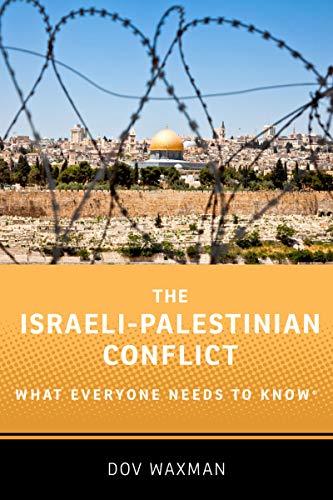
In a world of polarized headlines and social media echo chambers, Dov Waxman’s The Israeli-Palestinian Conflict: What Everyone Needs to Know serves as a vital intellectual anchor. Waxman, a leading scholar in Israel Studies, avoids the common pitfall of taking sides. Instead, he provides a nuanced, accessible framework for understanding the competing narratives that drive this century-long struggle. His core thesis is that the conflict is not just about land, but about clashing national identities, historical traumas, and the fundamental right to self-determination.
This book is significant because it dismantles the “ancient hatreds” trope, illustrating that the conflict is a modern phenomenon born out of the rise of nationalism in the late 19th and early 20th centuries. By structuring the book around frequently asked questions, Waxman ensures that readers—from students to policy professionals—can grasp the structural complexities of the occupation, the internal divisions within both societies, and the elusive nature of a lasting peace.
Chapter by chapter analysis
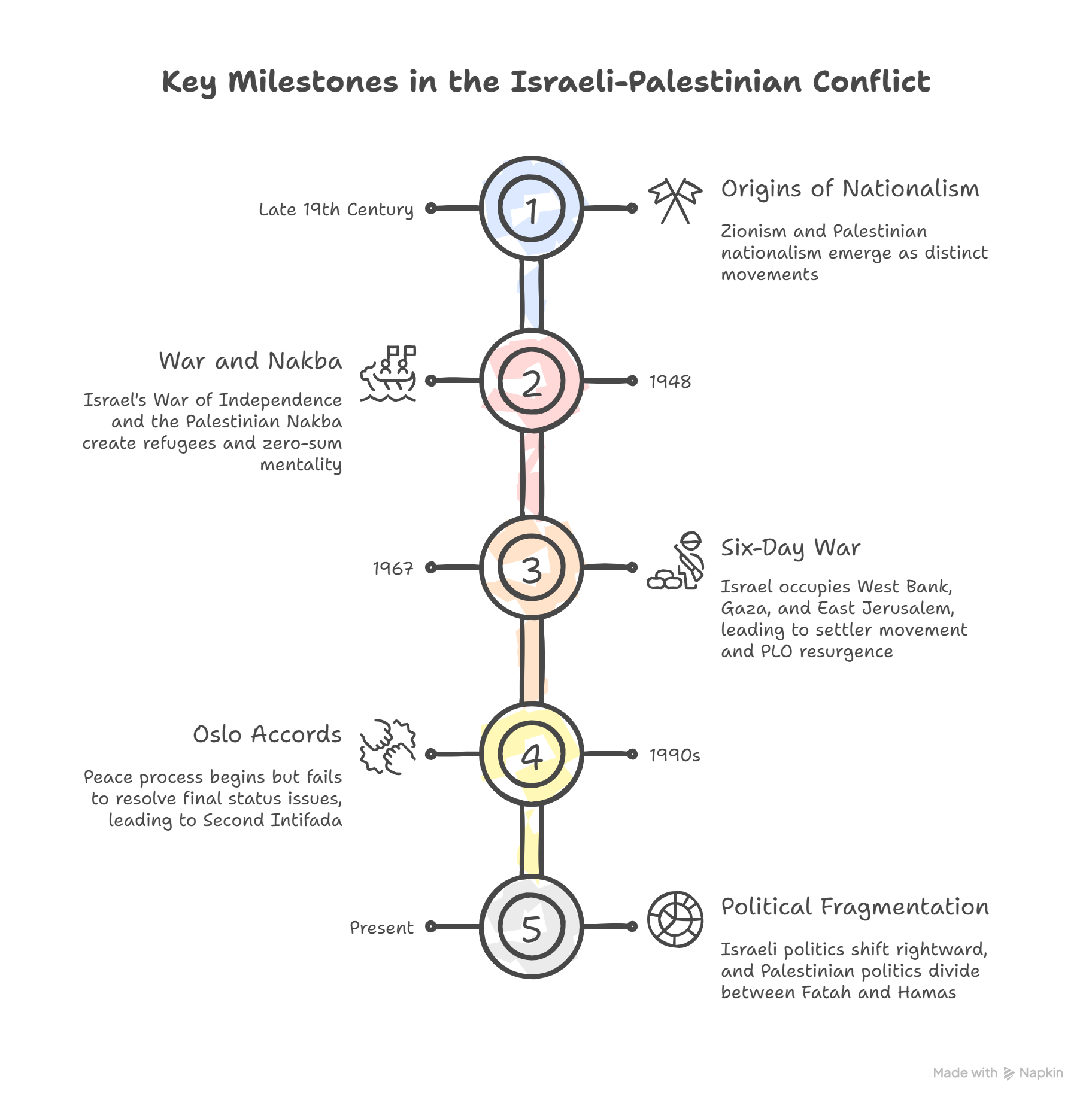
Waxman organizes the book into logical phases that track the evolution of the conflict from its inception to the current stalemate.
1. The Origins: Two Peoples, One Land
Waxman begins by tracing the parallel emergence of Zionism (Jewish nationalism) and Palestinian Nationalism. He argues that both movements are legitimate responses to the modern era: Jews seeking a safe haven from European antisemitism, and Palestinians seeking independence from Ottoman and later British colonial rule. The conflict began not as a religious war, but as a struggle between two groups claiming the same territory.
2. The 1948 War and the Dual Catastrophe
The book delves into the pivotal year of 1948, which Israelis celebrate as their War of Independence and Palestinians mourn as the Nakba (the Catastrophe). Waxman highlights how this period cemented the refugee crisis and created a “zero-sum” mentality where one side’s victory was viewed as the other’s existential ruin.
3. The 1967 Watershed and the Occupation
The Six-Day War changed everything. By occupying the West Bank, Gaza Strip, and East Jerusalem, Israel became a regional superpower but also an occupier. Waxman analyzes how this shift led to the rise of the Settler Movement in Israel and the revitalized resistance of the Palestine Liberation Organization (PLO).
4. The Oslo Years and the Peace Process
Waxman provides a post-mortem of the 1990s peace efforts. He identifies the structural flaws in the Oslo Accords, noting that they failed to address “final status” issues like the right of return for refugees, the borders of a future state, and the status of Jerusalem. The subsequent failure of these talks led to the Second Intifada and a deep-seated cynicism on both sides.
5. Internal Politics and the Current Impasse
The final sections explore the fragmentation of both political landscapes. On the Israeli side, there is a shift toward the Religious Right; on the Palestinian side, a deep rift exists between Fatah in the West Bank and Hamas in Gaza. Waxman explains how these internal dynamics make a unified peace agreement increasingly difficult to achieve.
Main Arguments & Insights
1. Competing Narratives are the Core Obstacle
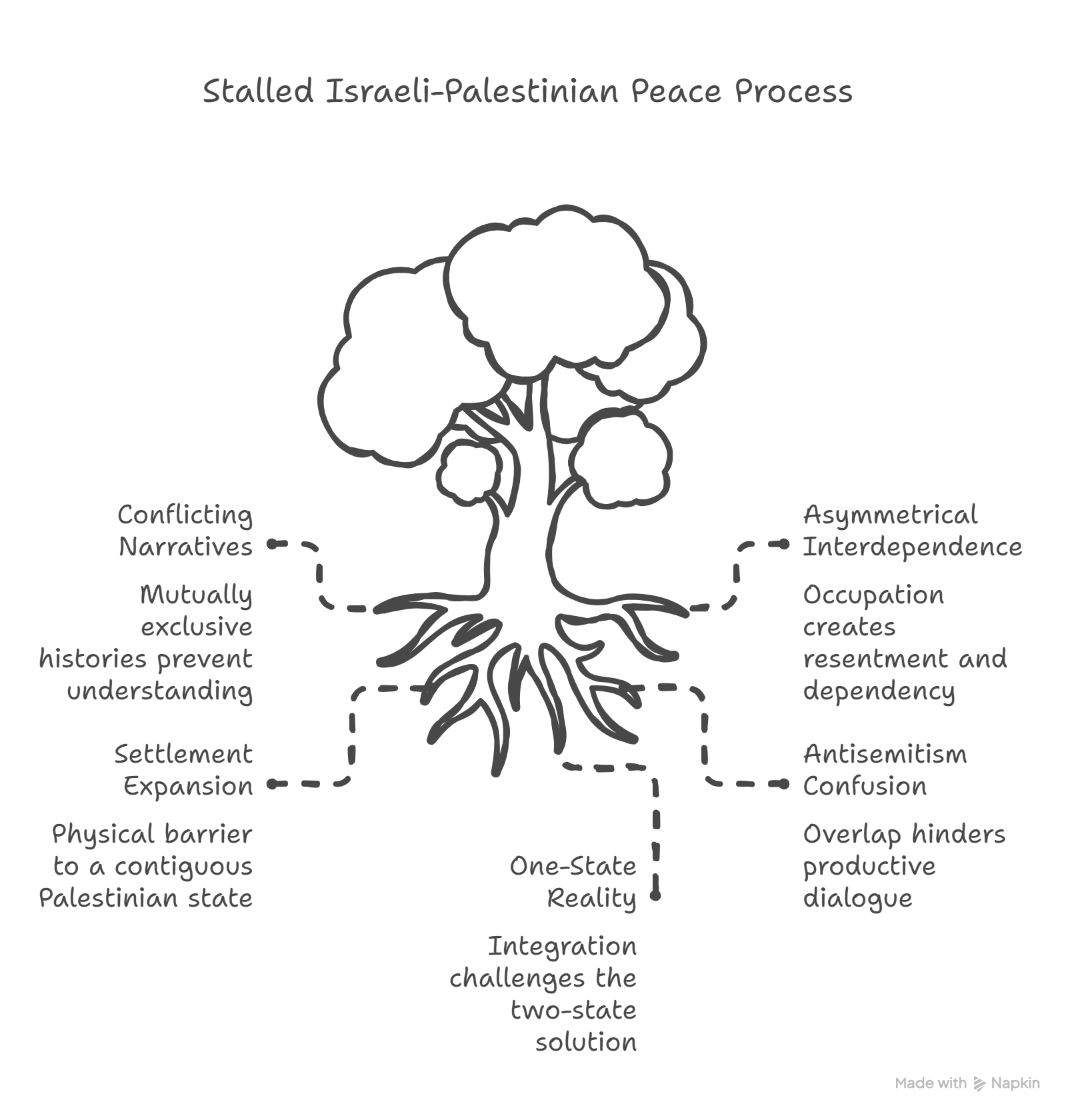
The conflict persists because both sides possess deeply entrenched, mutually exclusive historical narratives. For Israelis, the state is a miraculous return to an ancestral homeland; for Palestinians, it is a colonial intrusion. Waxman argues that peace requires more than just a border agreement—it requires a “mutual recognition” of each other’s history and suffering.
2. The Conflict is Asymmetrical but Interdependent
While Israel holds a massive military and economic advantage (asymmetry), both societies are inextricably linked. The security of one is tied to the stability of the other. Waxman points out that the Occupation has transformed Israeli society as much as it has suppressed Palestinian life, creating a symbiotic cycle of resentment and dependency.
3. Settlement Expansion as a Physical Barrier to Peace
Waxman provides a clear-eyed look at the Israeli settlement project. He argues that the continued expansion of settlements in the West Bank is not just a political provocation but a physical “de facto” annexation that makes the creation of a contiguous Palestinian state—and thus a two-state solution—increasingly impossible to implement.
4. The Distinction Between Anti-Zionism and Antisemitism
The author carefully navigates one of the most contentious debates in modern politics. He clarifies that while criticism of Israeli policy or Zionism is not inherently antisemitic, the two often overlap when Jewish self-determination is uniquely denied or when classic antisemitic tropes are used. Understanding this nuance is essential for productive dialogue.
5. The “One-State Reality” vs. the “Two-State Solution”
While the international community remains committed to a Two-State Solution, Waxman introduces the concept of the “one-state reality.” He argues that because of the integration of infrastructure and the spread of settlements, the two peoples are already living in a single, albeit unequal, political entity. This shifts the debate from “how to separate” to “how to achieve equal rights” within a shared space.
Critical Reception & Perspectives
The Israeli-Palestinian Conflict has been widely praised for its objectivity and balance. Reviewers often cite Waxman’s ability to present sensitive topics without resorting to polemics. Educators frequently use the book as a standard introductory text because of its clear, Q&A-style structure.
Strengths:
- Accessibility: Complex legal and historical concepts are broken down into plain English.
- Current Context: Unlike many histories that stop at 1948 or 1967, Waxman addresses modern issues like the Gaza blockades and the impact of social media on the conflict.
Criticisms:
- The “Both Sides” Trap: Some critics from the pro-Palestinian camp argue that by being “balanced,” the book underplays the radical power imbalance inherent in military occupation.
- Pro-Israel Critics: Conversely, some right-leaning critics argue that Waxman focuses too heavily on the settlements as the primary obstacle, while downplaying the role of Palestinian leadership’s rejectionism.
Real-World Examples & Implications
- Conflict Resolution in Business: The book highlights how “unaddressed trauma” prevents negotiation. In corporate settings, leaders can learn that purely logical solutions often fail if the emotional and historical grievances of the parties are ignored.
- Media Literacy: Readers learn to identify “narrative bias.” By understanding both the Zionist and Palestinian perspectives, one can better analyze news reports and distinguish between facts and ideological framing.
- The Power of Demographics: Waxman shows how population growth and birth rates directly influence political strategy. This is a crucial lesson for urban planners and sociologists studying how demographic shifts drive policy changes.
- The Fragility of International Law: The conflict serves as a case study for the limitations of the UN and international courts. It illustrates how international “norms” are often superseded by “national interest” and military power.
Suggested Further Reading
- “The Lemon Tree” by Sandy Tolan A powerful narrative non-fiction book that personalizes the conflict through the history of a single house and the friendship between an Israeli and a Palestinian. View on Goodreads
- “Righteous Victims” by Benny Morris A comprehensive, more academic history of the Zionist-Arab conflict from 1881 to 2001, providing deep archival detail. View on Goodreads
- “The Hundred Years’ War on Palestine” by Rashid Khalidi Provides a crucial Palestinian perspective, framing the conflict as a struggle against settler-colonialism. View on Goodreads
- “Side by Side: Parallel Histories of Israel-Palestine” by Sami Adwan et al. An innovative book that presents Israeli and Palestinian historical narratives on the same page, allowing for direct comparison. View on Goodreads